Monday, November 19, 2018

Festively Fit: Thrive Through The Holidays


The Good News: There is a Better Way!
If all this sounds familiar, your first step is to change your mindset. Practicing sound nutrition, health and fitness habits is vital to life-long wellness. Healthy eating, effective physical activity and regular rest are practices that should become part of who you are and essential to your daily life, just like brushing your teeth or taking a shower. This shift in mindset sets the stage for greater self-empowerment and self-confidence, as well as a transition in locus of control from external to internal.

The key is to recognize that you have the power to transform your life and live it to the fullest during times of joy, trouble, hardship, success, holidays and festivities by applying key foundational behavioral principles. When you do that, you won’t get bogged down with seemingly endless challenging choices in every situation.
If you make the following key foundational behaviors a priority, circumstantial, seasonal and unexpected events won’t have the power to derail you. Each 
“Festively Fit Tip” showcases an example of how you can apply these behaviors in real situations.

1) Drink water
Choose to drink water over anything else. Cold or hot herbal teas are a good option, too. Drink two cups of water when you first wake up in the morning and when you feel hungry outside of your regular mealtime/regular snacks.

Festively Fit Tip: When you arrive at a holiday party, drink two cups of water or herbal tea before you start eating.

2) Move more, sit less
If you have the option of standing versus sitting, stand. If you have the option of walking versus driving, walk. If you have the option of moving about versus standing, move about. Daily physical activity and structured exercise, including cardio, strength and flexibility exercises, are a part of a healthy daily routine.

Festively Fit Tip: When you attend a holiday party or an event, find a way to avoid sitting for the majority of the time (move about the room, start a dance party, etc.)

3) Something positive is better than nothing
Get away from an all-or-nothing mindset. If you don’t have time for a full workout, do 10 minutes of exercise and you’ll reap some positive benefits. If you forgot to add any fruits or vegetables to your meals during the day, add an apple at night. Apply this principle where it makes sense.

Festively Fit Tip: Focus on nutritious foods during the holidays rather than on what you shouldn’t eat. Each time you eat at home or at a holiday party, add things to your plate that are good for you, such as vegetables, fruit, nuts or other healthy proteins or grains.

4) Take control 
Focus. Reflect. Ask yourself: Is this behavior good for me? Be mindful. Choose wisely. Follow-through.

Festively Fit Tip: When you are at a party and about to fill your plate with all the goodies from the buffet, pause and ask yourself: Is it time to eat now? What have I already eaten today? What is available here that is considered healthy?

5) Half is enough
Eat only half of the less-nutritious foods on your plate. If you take a cookie, for example, eat half of it and pack the other half for another day.

Festively Fit Tip: At a holiday party or event, serve yourself only half of what is on the serving platter. For example, if you want a brownie, cut it in two on the serving platter and only serve yourself half (and don’t go back for seconds).  

Tuesday, November 13, 2018

Pelvic Floor Muscles


Pelvic floor muscles
Having strong pelvic floor muscles gives us control over the bladder and bowel. Weakened pelvic floor muscles mean the internal organs are not fully supported and you may have difficulty controlling the release of urine, faeces (poo) or flatus (wind).
Common causes of a weakened pelvic floor include childbirth, obesity and the associated straining of chronic constipation. Pelvic floor exercises are designed to improve muscle tone and prevent the need for corrective surgery.

What are pelvic floor muscles?
Pelvic floor muscles are the layer of muscles that support the pelvic organs and span the bottom of the pelvis. The pelvic organs are the bladder and bowel in men, and bladder, bowel and uterus in women. The diagram below shows the pelvic organs and pelvic floor muscles in women (right) and men (left).

The pelvic floor muscles stretch like a muscular trampoline from the tailbone (coccyx) to the pubic bone (front to back) and from one sitting bone to the other sitting bone (side to side). These muscles are normally firm and thick.

Imagine the pelvic floor muscles as a round mini-trampoline made of firm muscle. Just like a trampoline, the pelvic floor is able to move down and up. The bladder, uterus (for women) and bowel lie on the pelvic floor muscle layer.

The pelvic floor muscle layer has hole for passages to pass through.There are two passages in men (the urethra and anus) and three passages in women (the urethra, vagina and anus). The pelvic floor muscles normally wrap quite firmly around these holes to help keep the passages shut. There is also an extra circular muscle around the anus (the anal sphincter) and around the urethra (the urethral sphincter).
Although the pelvic floor is hidden from view, it can be consciously controlled and therefore trained, much like our arm, leg or abdominal muscles.

What do pelvic floor muscles do?
Pelvic floor muscles provide support to the organs that lie on it. The sphincters give us conscious control over the bladder and bowel so that we can control the release of urine, faeces (poo) and flatus (wind) and allow us to delay emptying until it is convenient. When the pelvic floor muscles are contracted, the internal organs are lifted and the sphincters tighten the openings of the vagina, anus and urethra. Relaxing the pelvic floor allows passage of urine and faeces.

Pelvic floor muscles are also important for sexual function in both men and women. In men, it is important for erectile function and ejaculation. In women, voluntary contractions (squeezing) of the pelvic floor contribute to sexual sensation and arousal.

The pelvic floor muscles in women also provide support for the baby during pregnancy and assist in the birthing process.
The muscles of the pelvic floor work with the abdominal and back muscles to stabilise and support the spine.

What can make these muscles loose?
Pregnancy and childbirth for women
Straining on the toilet
Chronic coughing
Heavy lifting
High impact exercise
Age
Obesity

How can I strengthen these muscles?
The first thing you need to do is find out which muscles you need to train. It is very important to correctly identify your pelvic floor muscles before moving into a regular pelvic floor muscle exercise program. To find out how to find and strengthen your pelvic floor muscles, see the links below.

Monday, November 5, 2018

Ways To Give The Gift of Health


1. Services
Health club memberships promote year-round health, but they can be pricey. The average cost in the United States is about $58 per month or $700 per year. If that's too much, consider a gift certificate for a few sessions with a personal trainer. Look for a personal trainer who's certified through an organization such as the American College of Sports Medicine (ACSM), American Council on Exercise (ACE), National Academy of Sports Medicine (NASM).

2. Gadgets
A wearable fitness monitor is helpful to track everything from heart rate to the number of steps walked per day. The majority cost between $50 and $200, and you'll find them at big box stores and sports retailers. An automatic pill dispenser makes sticking to a medication regimen easier for someone who takes several pills daily. The devices are available in drugstores and online. Prices start at about $50.

3. Workout equipment
For people who like to exercise at home, consider giving a new set of resistance bands, hand weights, a yoga mat, or exercise clothes with fibers that wick away moisture. Any of these can be found for less than $50.

4. Classes
An exercise class makes a good gift, especially if you offer to come along. Sometimes people are more inclined to exercise with company. Plus, having someone with you adds an element of safety, and you can share a common goal.  Consider tai chi, ballroom dance, or yoga. Classes are usually sold in packages. You'll find them in exercise studios, hospitals, and community centers. Prices vary.

5. Information
Don't forget the gift of knowledge. Not surprisingly, we are partial to products from Harvard Health Publishing. Give someone a newsletter for $20 a year, or one our many special health reports for $20 ($18 for an electronic copy). There are reports on dozens of topics, each offering insight and advice for improving your health, such as gaining better balance, boosting energy, and losing weight. Check them out at www.health.harvard.edu.

Monday, October 29, 2018

What You Should Do After EVERY Workout


1. Commit to a Cool-down
When you're especially crunched for time, you might decide it’s best to head to the locker room right after cardio. Not a great idea. A proper cool-down—where you move around at a light intensity—only takes a few minutes and helps you stay safe at the gym.

Allowing your body to comfortably come down from moderate or intense exercise provides a smooth, gradual transition away from increased heart rate. And cooling down helps prevent lightheadedness from blood pooling in the lower extremities, among other benefits. 

2. Turn Off Your Workout App
Analyzing and comparing your tracker metrics from one workout to the next can be motivating—plus it helps you keep improving toward your goals. While some smart workout apps detect when you’re done exercising and stop collecting data automatically, many don’t.

Forgetting to turn off a workout app can be frustrating: The longer the app runs when you’re no longer exercising, the more messed up the metrics get. One fix is to set a standing reminder on your phone for times when you typically work out (such as a weekly fitness class or personal training appointment). The reminder will prompt you to tap the app off at the appropriate time.

3. Stretch the Muscles You Worked
You’ve heard it before, and for good reason: Stretching is an important components of fitness. Taking the time to perform a good stretch after working out—when your muscles are already warm—can help improve posture, increase mobility and range of motion, and enhance muscular relaxation. Plus, it’s nice to take a few minutes to mentally relax before carrying on with your day. If possible, tack on a few minutes of foam rolling to further iron out muscle tension.

4. Wash Your Hands
You don’t hear this tip all that often in relation to exercise, but it can go a long way toward keeping you healthy so you don’t miss workouts due to illness. A lot of people handle (and sweat all over) gym equipment, such as dumbbells, weight machines, kettlebells and bike handlebars. Before leaving the gym, wash hands thoroughly in the shower or at a sink to prevent the spread of germs. 

5. Swap Out Your Shoes
If you typically wear the same fitness shoes at the gym as you do walking around town, consider tweaking your approach. Change sneakers before heading out so you get in the habit of wearing a designated pair only at the gym. This will keep your kicks feeling new and supportive for longer—and the gym floor cleaner, too.

6. Refill Your Water Bottle
It’s easy to drink water right before and during a workout because your water bottle is at arm’s reach. But people often stop sipping as soon as they move on to other things. To stay hydrated for longer, top up your water bottle as you’re leaving the gym. Keep it handy so you can drink from it for the rest of the day.

7. Have a Post-workout Bite
Aim to eat a healthy snack within about half an hour after a moderate-to-intense workout. Experts recommend a combo of carbs to replenish glycogen stores (fuel for the body) and protein to help repair muscle. Good post-workout snacks include almond butter spread on banana slices or whole-grain bread, or a plain yogurt smoothie with fruit.

8. Prep Your Gym Bag for Next Time
Preparing for your next workout just as you’re finishing your current one can help set the stage for long-term fitness success. Once you’re back at home, re-pack your gym bag right away with socks, a towel, shoes and anything else you might need. When it’s time for your next workout, you’ll be ready to grab your bag and go, reducing barriers to exercise like lack of time. Plus, knowing you’ve already prepped for the workout is a great motivator.


Thursday, October 25, 2018

Why You Should Train For Dynamic Balance


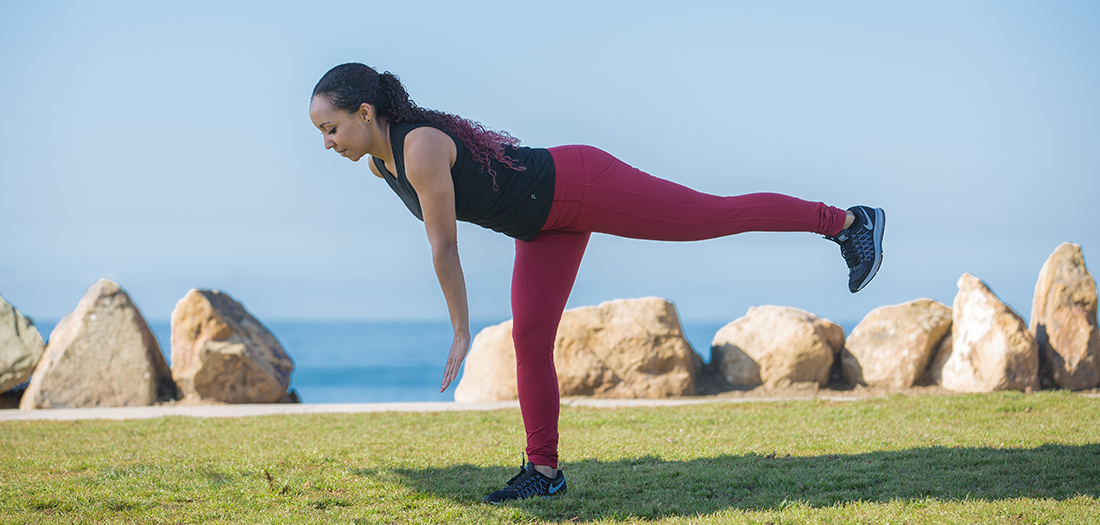
When we hear the word balance, we usually think of standing still on one leg or trying not to fall when walking on a slippery surface. While standing on one leg can certainly help improve static balance, maintaining control of a moving center of mass over a changing base of support is probably more relevant to many of life’s activities. This type of training is known as dynamic balance, and can help enhance skills that are relevant to a number of sports and activities of daily living. Dynamic balance training is also an effective way to help you achieve your fitness goals. 

Optimal balance is achieved when multiple sensory systems provide information about the body’s position as it moves over the ground. The eyes (visual), inner ear (vestibular) and skin (kinesthetic) contain numerous sensory receptors that provide important feedback to the central nervous system (CNS) about which muscles to activate and when. Maintaining static balance as the body remains in one position is relatively easy because you can concentrate on which muscles to contract to remain stable. However, many activities of daily living happen quickly, which means you have to rely on conscious thought to control which muscles to activate. 

Here are five reasons why it’s important to train dynamic balance and how adding it to your exercise program can produce results.

1. Training for dynamic balance could help you improve your running technique. The gait cycle, whether walking or running, requires the body to maintain control of its center of gravity as it changes position over a constantly moving base of support. During the gait cycle your body must maintain control of your center of gravity—usually found near the belly button—as you transition from one leg to the other. As your right foot hits the ground, the left leg prepares to swing forward; at the same time your left arm is swinging forward while your right arm is moving backward. The motion created by the swinging of the arms and legs results in a counter rotation between the upper back and pelvis to generate the momentum to move the body in a forward direction.

2. Dynamic balance training is an effective way to strengthen and tone the obliques and the muscles of the hips, thighs, glutes and low back. These muscles connect your hips to your pelvis and your pelvis to your spine. Increasing the strength of the core muscles can help improve your balance and coordination, while also improving your appearance.

3. Having good dynamic balance can help improve your coordination and ability to react to sudden changes of direction, both of which can help reduce the risk of an accidental fall. Controlling dynamic balance should be a reflexive response that happens automatically. If you feel that you don’t have good balance, it is extremely important that you do the work necessary to improve it.

4. Dynamic balance exercises can easily be added to the warm-up phase of a workout to prepare for lower-body strength training, a long run, an obstacle-course race, or for recreational sports such as tennis, basketball or soccer.

5. Dynamic balance exercises can be used as low-intensity recovery exercises between sets of high-intensity interval training or as a low-intensity bodyweight workout to help promote recovery the day after a challenging training session. These exercises can also be used on those days when you can’t make it to the gym, but still want to do something active. 

Wednesday, October 17, 2018

What To Look For In A Fitness App


Does it fit your skill level? 
Apps come in all shapes and sizes and it’s important to find one tailored to your workout regimen. Someone who is a newbie or does not like exercising may need an app that is in their face and is going to continually stimulate and encourage them. On the other hand, people who are already fit and know the basics are often looking for something more data driven to help them reach that next level.

Is it personal? 
Everyone’s body is different, so no fitness app should take a one-size-fits-all approach to your health. It’s important to look for apps that tailor their recommendations to you. The more the app knows about you, the better it’s able to help you. If an app doesn’t get any information about your height, weight, age, sex and intensity level, that’s a sign you should uninstall it.

Does it use all your phone’s features? 
Your phone is a marvel of technology, and the best apps take advantage of all your phone has to offer. The best apps use your GPS and accelerometer to track your workout.  Some will use sound to motivate you, and others use your phone’s camera to help you nail down the correct form for an exercise.

Is it connected? 
The fitness app you choose shouldn’t be a standalone program – it should work with your other phone apps to give you as large a view of your health as possible. We know that fitness and health is a combination of diet, exercise, sleep and more.  Having apps that work together and talk to each other to track all of those factors is imperative.

Does it have good reviews? 
While you shouldn’t base your decision solely on reviews, a poorly reviewed app is a sign that it isn’t the one you want.  Check for reviews that go into detail about what the reviewer did or didn’t like about the app.  You can always test it out for yourself, but if a lot of reviews mention similar issues, you might want to just stay away.

Is it social? 
One of the hardest parts of getting into shape is sticking with the program, which is why having people to encourage you and keep you accountable is  key to reaching your goals. Many apps will allow you to share your workouts to Twitter and Facebook.  You can have a comparison and competition with friends, and if you see that you’re behind, it might encourage you to work out more to try and beat them.

Does it keep you interested? 

Downloading the best app in the world won’t make a difference if you never actually use it.  That’s why the right app for you is the one that keeps you interested and keeps you coming back. Simply having the app on your phone isn’t going to help you lose weight. They make it easier to engage in good behaviors, but it’s ultimately up to you to go out and exercise.

Monday, October 8, 2018

Why You Should Add Pumpkin Seeds To Your Diet


Pumpkin seeds are truly a gift from nature. They don’t just taste great (actually fantastic!), but can also serve as a healthy protein option too. Keep in mind that raw, organic darkly colored heirloom pumpkin seeds or raw, organic bright green pumpkin seeds will offer more nutrients than other varieties that are salted, roasted or sprayed with pesticides, so be sure you choose the best source. (These versions also tastes the best too!)

Here’s what these seeds have to offer:

Iron
Pumpkin seeds are rich in iron and are one of the best sources in such a small amount found throughout the plant-based diet. Though beans and some legumes are much higher (along with grains), pumpkin seeds are pretty impressive, offering 16 percent   of your daily needs in just 1/4 a cup. Raw, organic pumpkin seed protein powder is even available now, which would be an even denser way to get your fill of iron from this healthy seed, providing 40 percent, almost identical to hemp protein protein powder. 

Alkalizing and Anti-Inflammatory
Raw, green pumpkin seeds are green because they have a high amount of natural chlorophyll in them. Chlorophyll is found in all green foods, which alkalizes and naturally cleanses the body (no need for a detox here!). Pumpkin seeds offer the most of any seed or nut since they are denser in the green hue, though hemp and even purely raw sunflower seeds are other good sources. Chlorophyll alkalizes the blood, which prevents inflammation that occurs from a high acidic diet or other lifestyle factors.

Fiber
Pumpkin seeds also have more fiber than many nuts, boosting 5 grams per 1/4 cup. This can help regulate your blood sugar, enhance regularity, and the fiber in pumpkin seeds is easier to digest than from some other sources like beans or hard-to-digest grains and nuts. Pumpkin seeds have also been linked to improving insulin regulation, which can help those with blood sugar issues or even diabetes.

Non-Allergenic
If you have a nut allergy, you’ll especially want to jump on board the pumpkin seed train! Pumpkin seeds and other seeds should be enjoyed since they provide beneficial fatty acids that one might miss out on when they can’t enjoy the healthy fat from nuts. Even if you don’t have an allergy to nuts, these seeds will provide other nutrients that you won’t get in such a small serving from other foods. Pumpkin seeds are also a great source of soy-free protein for those that have a soy allergy or just want to avoid it.

Protein
Of course, we can’t forget protein! Pumpkin seeds have a good amount of protein in a small serving, containing 5 grams in just once ounce. They’re a rich source of amino acids and contain an especially high amount of tryptophan, the amino acid that enhances serotonin production in the body. They’re true mood-boosters and make a great addition to any meal to up the protein content. Think smoothies, oatmeal, salads, soups, stir-fries, and more!

Zinc
These seeds are also a fantastic source of zinc, which helps carbohydrate metabolism in the body, hormone production, and even improves immune health and even your skin, hair, and nails. Pumpkin seeds contain 23 percent of your daily zinc needs in just 1/4 cup serving. Cacao, nuts, seeds, and some grains are also good sources.

Healthy Fats
Pumpkin seeds might be high in fat, but it’s the fat your body loves! They’re an especially good source of omega 3 fatty acids and a rich source of mono-unsaturated fats that protect your heart, prevent inflammation, and help manage your weight. Like all healthy fats, they’re not meant to be consumed in massive amounts, but eaten in single serving portions at each of your meals or as a healthy snack. Healthy fats ensure good heart health, help balance your blood sugar, and are an important factor in your mood, digestion, and overall health. Always choose whole food based sources of healthy fats which also have fiber and whole food sources of vitamins and minerals.

Anti-microbial
Pumpkin seeds have even been shown to eliminate seriously dangerous microbes from the body, including parasites!  These seeds are no joke when it comes to keeping you healthy all the way around. Just 1/4 cup a day has been shown to be beneficial at improving immune health and also eliminating (not just preventing) various unhealthy microbes from harming the body. Keep in mind an overall healthy diet, rich in whole, plant-based foods is a key primer for keeping unhealthy microbes away, though some specific foods like pumpkin seeds, garlic and coconut have been linked to especially impressive treatment benefits as well. Even for yeast infections like candida, pumpkin seeds have been shown to prevent yeast overgrowth, inflammation, and can improve skin conditions in those with skin-based yeast infections.

Magnesium
Magnesium is such an important mineral for your health.  It’s commonly called the ‘forgotten mineral’ because many people suffer health issues, all because of magnesium deficiency (headaches, low blood sugar, constipation, insomnia, lack of energy, and a foul mood, just to name a handful). Some people believe this is because the important mineral that’s found in the soil has been destroyed by factoring farming, soil depletion and other agricultural factors, while some people simply don’t eat enough naturally magnesium-rich foods (plant-based foods). Animal foods, sugar, refined grains and processed foods don’t contain the true magnesium that whole plant-based foods do. Pumpkin seeds are some of the richest sources of magnesium in such a small serving, while greens, grains, beans, legumes, cashews, almonds, and cacao are other especially dense sources.

How to Use Pumpkin Seeds:
As you can see, protein is just one of the many nutrients found in pumpkin seeds. Be sure to enjoy them in oatmeal, smoothies, chia pudding, raw energy bites, granola bars, muffins, salads, soups, and whole grain dishes, which are all easy ways to add the seeds to your diet. Toss them into one of your meals each day, or enjoy them in a healthy trail mix!

You might also like to try some of these deliciously healthy recipes with pumpkin seeds that we love: