Wednesday, February 19, 2020

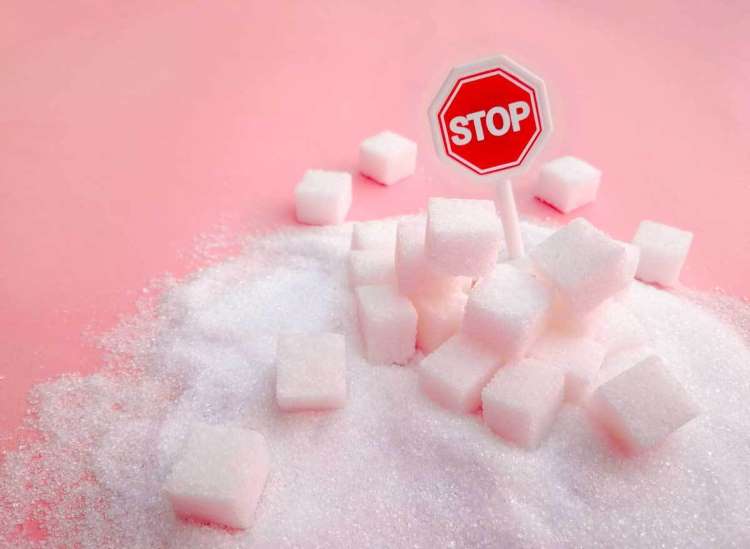
Ways To Stop Eating Lots of Sugar


1. Cut Back on Sugar-Filled Drinks
Some popular drinks contain a heap of added sugar.
Sodas, energy drinks, sports drinks and fruit drinks contribute an astounding 44% of the added sugar in the American diet.

So-called "healthy" drinks, such as smoothies and fruit juices, can still contain eye-watering amounts of it. For example, 15.2 ounces (450 ml) of 100% apple juice contains more than 12 teaspoons (49 grams)

Your body does not recognize calories from drinks in the same way it does from food. Drinks don't make you feel as full, so people who consume lots of calories from drinks do not eat less to compensate.

Studies have consistently shown that reducing your intake of sugary drinks can help with weight loss.

Here are some better, lower-sugar drink options:
• Water: It's free and has zero calories.
• Sparkling water with a squeeze of fresh lemon or lime: Homemade soda.
• Water with mint and cucumber: Amazingly refreshing in warm weather.
• Herbal or fruit teas: Drink them hot or cold with ice.
• Tea and coffee: Stick to unsweetened tea or black or flat white coffee.

Cutting back on sugary drinks can massively reduce your sugar intake and help you lose weight. 

2. Avoid Sugar-Loaded Desserts
Most desserts don't provide much in the way of nutritional value.
They are loaded with sugar, which causes blood sugar spikes and can leave you feeling tired, hungry and craving more sugar.

Grain and dairy-based desserts, such as cakes, pies, doughnuts and ice cream, account for over 18% of the intake of added sugar in the American diet.
If you really feel the need for something sweet, try these alternatives:

• Fresh fruit: Naturally sweet and full of fiber, vitamins and minerals.
• Greek yogurt with cinnamon or fruit: Rich in calcium, protein and vitamin B12.
• Baked fruit with cream: Try pears, apple or plums.
• Dark chocolate: In general, the higher the cocoa content, the lower the sugar.
• A handful of dates: They're naturally sweet and extremely nutritious.

Swapping sugar-heavy desserts for fresh or baked fruit not only reduces your sugar intake, it also increases the fiber, vitamins, minerals and antioxidants in your diet.

3. Avoid Sauces With Lots of Sugar
Sauces such as ketchup, barbecue sauce and sweet chili sauce are commonplace in most kitchens. However, most people aren't aware of their shocking sugar content.
A single tablespoon (15-gram) serving of ketchup may contain 1 teaspoon (4 grams).
Although, some varieties have no added sugar. Always read the label to be sure you are choosing the lowest-sugar option.

Here are some other options to flavor your food:
• Fresh or dried herbs and spices: Contain no sugar or calories and can have added health benefits.
• Fresh chili: Give your food a sugar-free kick.
• Yellow mustard: Tasty and contains virtually no sugar or calories.
• Vinegar: Sugar and calorie-free, with a zing similar to that of ketchup. Some balsamic vinegars and creams may contain sugar.
• Harissa paste: Can be bought or made and is a good replacement for sweet chili sauce.
• Pesto: Fresh and nutty, great on sandwiches or eggs.
• Mayonnaise: Although it's sugar-free, it's high in fat, so be cautious if you're trying to lose weight.

4. Eat Full-Fat Foods
Low-fat options of your favorite foods — peanut butter, yogurt, salad dressing — are everywhere.
If you've been told that fat is bad, it may feel natural to reach for these alternatives, rather than the full-fat versions, when you're trying to lose weight.
However, the unsettling truth is that they usually contain more sugar and sometimes more calories than their full-fat counterparts.

A 4-ounce (113-gram) serving of low-fat vanilla yogurt contains 4 teaspoons (16 grams) of sugar and 96 calories.

The same amount of full-fat plain yogurt contains just over a teaspoon (5 grams) of naturally occurring milk sugar and only 69 calories.
Another example is an 8-ounce (237-ml) coffee made with whole milk and no added sugar, which contains half a teaspoon (2 grams) of naturally occurring milk sugar and 18 calories.

In contrast, the same amount of a low-fat mocha drink contains 6.5 teaspoons (26 grams) of added sugar and 160 calories.
High sugar intake has also been shown to cause weight gain, which negates the reason you might have chosen a low-fat food in the first place.
When you're trying to cut your sugar intake, it's often better to choose the full-fat version instead.

5. Eat Whole Foods
Whole foods have not been processed or refined. They are also free of additives and other artificial substances.

At the other end are ultra-processed foods. These are prepared foods that contain salt, sugar and fats, but also substances not usually used in home cooking.
These substances can be artificial flavors, colors, emulsifiers or other additives. Examples of ultra-processed foods are soft drinks, desserts, cereals, pizzas and pies.
Ultra-processed foods differ from standard processed foods, which usually only have minimal ingredients added, all of which you might find in a standard kitchen.
Examples of standard processed foods are simple bread and cheese.
90% of the added sugars in the average American's diet come from ultra-processed foods, whereas only 8.7% come from foods prepared from scratch at home using whole foods.

And it isn't just junk food that contains high amounts of it.
Seemingly healthy options like canned pasta sauce can also contain alarming amounts. One serving (128 grams) can contain nearly 3 teaspoons (11 grams).
Try to cook from scratch when possible so you can avoid added sugars. You don't have to cook elaborate meals. Simple tricks like marinating meat and fish in herbs, spices and olive oil will give you delicious results.

6. Check for Sugar in Canned Foods
Canned foods can be a useful and cheap addition to your diet, but they can also contain a lot of added sugar.

Fruits and vegetables contain naturally occurring sugars. However, they're not an issue since they do not affect your blood sugar in the same way that added sugar does.  Avoid canned foods that are packed in syrup or have sugar in the ingredients list. Fruit is sweet enough, so go for versions that are labeled with "in own juice" or "no added sugar.

If you buy canned fruits or vegetables that do have added sugar, you can remove some of it by rinsing them in water before you eat them.

7. Be Careful With So-Called "Healthy" Processed Snack Foods
Most people know that candy and cookies contain a lot of sugar, so they may look for "healthy" snack alternatives. Surprisingly, snacks like granola bars, protein bars and dried fruit can contain as much, if not more, sugar than their unhealthy rivals, such as chocolate bars.
Some granola bars can contain as much as 8 teaspoons (32 grams).

Dried fruit is full of fiber, nutrients and antioxidants. However, it is also full of natural sugar, so it should be eaten in moderation.  Some dried fruit also contains high quantities of added sugar. To avoid this, look for ingredients labels that say "100% fruit.

Or try these healthy snack ideas instead:
• A handful of nuts: Packed with good calories, protein and healthy fats.
• Trail mix: Make sure it's just nuts and dried fruit, without added sugar.
• No-added-sugar jerky: Full of protein and low in calories.
• Hard-boiled egg: This superfood is high in protein, vitamins and minerals.
• Fresh fruit: Contains natural sugar to satisfy those sugar cravings.

Don't be fooled by the "healthy" marketing messages on some snacks. Be prepared and take low-sugar snacks with you when you're on the go.

8. Avoid Sugar-Filled Breakfast Foods
Breakfast cereals are among the worst when it comes to added sugar. One reports found that some of the most popular ones contained over half of their weight in added sugar.  One cereal in the report contained over 12 teaspoons (50 grams) per serving, which made it 88% sugar by weight.

What's more, the report found that granola, which is usually marketed as "healthy," has more sugar than any other type of cereal, on average.
Popular breakfast foods, such as pancakes, waffles, muffins and jams, are also loaded with added sugar.

Switch to these low-sugar breakfast options instead:
• Hot oatmeal: Add some chopped fruit if you like it sweet.
• Greek yogurt: Add fruit and nuts for extra good calories.
• Eggs: Boiled, poached, scrambled or as an omelet.
• Avocado: Packed full of nutrition and healthy fats for energy.

Choosing a low-sugar option with high protein and fiber at breakfast will help you feel full until lunchtime, preventing unnecessary snacking.

9. Read Labels
Eating less sugar isn't as easy as just avoiding sweet foods. You've already seen that it can hide in unlikely foods, including some breakfast cereals, granola bars and dried fruit.

However, some savory foods, such as bread, can also contain a lot of added sugar. Two slices can contain 1.5 teaspoons (6 grams).
Unfortunately, it isn't always easy to identify added sugars on a food label. Current food labels don't differentiate between natural sugars, such as those in milk or fruits, and added sugars.

To see if a food has sugars added, you will need to check the ingredients list. It is also important to note the order in which sugar appears on the list, since ingredients are listed in order of the highest percentage first.

Food companies also use more than 50 other names for added sugar, which makes it more difficult to spot. Here are some of the most common:
• High-fructose corn syrup
• Cane sugar or juice
• Maltose
• Dextrose
• Invert sugar
• Rice syrup
• Molasses
• Caramel

Thankfully, identifying sugar in packaged food in the US just got much easier.
The US Food and Drug Administration (FDA) has changed their rules so that companies have to show the amount of added sugar in their products on the ingredients label in grams, along with a percentage of the daily value.
Companies have until 2018 to change their labels to comply.

10. Eat More Protein and Fat
A high sugar intake is linked to increased appetite and weight gain.
Conversely, a diet low in added sugar but high in protein and fat has the opposite effect, reducing hunger and food intake.

Added sugar in the diet, particularly fructose, increases appetite. The signals that usually let your brain know that you are full do not work properly, which can lead to overeating and weight gain.

On the other hand, protein has been proven to reduce appetite and hunger. If you feel full, then you are less likely to crave the quick hunger fix that sugar provides.
Protein has also been shown to directly reduce food cravings. One study showed that increasing protein in the diet by 25% reduced cravings by 60%
Fat is very high in energy. It contains 9 calories per gram, compared to 4 calories per gram in protein or carbs.

A high fat intake is also associated with reduced appetite. According to the fat content of a food, fat receptors in the mouth and gut alter the way it's digested. This causes a reduction in appetite and subsequently, calorie intake.
To curb sugar cravings, stock up on protein and fat-rich whole foods, such as meat, fish, eggs, full-fat dairy products, avocados and nuts.

11. Consider Natural Sweeteners
For some people, sugar can be as addictive as drugs or alcohol. In fact, studies have shown that it can affect the brain in a way similar to that of some drugs.

Addiction to sugar produces cravings and a "tolerance" level, meaning more and more of it must be consumed to satisfy those cravings.
It is also possible to suffer from sugar withdrawal.

Studies have found that rats experienced signs of anxiety and depression after a high sugar diet was stopped.

This shows that giving up sugar can be very difficult for some people. If you are struggling, there are a few naturally sweet alternatives that are actually good for you.
• Stevia: Extracted from the leaves of a plant called Stevia rebaudiana, it has virtually no calories and has been shown to help reduce blood pressure and blood sugar in people with diabetes.
• Erythritol: Found naturally in fruit, it only contains 6% of the calories of sugar, but it's much sweeter, so only a little is needed. It also doesn't cause blood sugar spikes.
• Xylitol: A sweetener found naturally in many fruits and vegetables. It doesn't cause blood sugar spikes.

Once you cut your sugar intake, you'll adjust to enjoying foods that are less sweet.

12. Don't Keep Sugar in the House
If you keep high-sugar foods in the house, you are more likely to eat them.
It takes a lot of willpower to stop yourself if you only have to go as far as the pantry or fridge to get a sugar hit.

Although cravings for snacks and sweet foods can occur at any time of the day or night, they may be worse in the evenings. Evidence shows that your circadian rhythm, or internal clock, increases hunger and cravings for sweet and starchy foods in the evenings.

It is important to consider how you're going to distract yourself when you feel the need to eat something sweet.  Studies have shown that distraction, such as doing puzzles, can be very effective at reducing cravings. If that doesn't work, then try to keep some healthy, low-sugar snacks in the house to munch on instead.

13. Don't Shop When You're Hungry
If you've ever been shopping when you're hungry, you know what can happen.
Not only do you buy more food, but you also tend to put less healthy options in your shopping cart.

Shopping while hungry has been shown not only to increase the amount of food purchased, but also to affect the type of foods you buy. In a controlled study, 68 participants fasted for five hours. Half the participants were then allowed to eat as many wheat crackers as they liked just before going shopping, while the other half went shopping on an empty stomach. They found that the hungry group purchased more high-calorie products, compared to those who were less hungry.
In another study, 82 grocery shoppers were observed to see if the time of day they went shopping had any effect on their purchases.

The study found that those who shopped between 4–7 pm, around dinnertime, when they were likely to be hungry, bought more high-calorie products than those who shopped between 1–4 pm, shortly after lunch.

14. Get Enough Sleep
Good sleep habits are incredibly important for your health. Poor sleep has been linked to depression, poor concentration and reduced immune function.
The link between lack of sleep and obesity is well known. But recently, researchers discovered that lack of sleep also affects the types of food you eat.

One study looked into this phenomenon in 23 healthy adults. Their brains were scanned using functional magnetic resonance imaging (fMRI), first after a full night's sleep and then following a sleepless night.

The researchers found that function of the frontal lobe, the part of the brain that controls decision making, was impaired after a sleepless night. Furthermore, the area of the brain that responds to rewards and controls motivation and desire was stimulated.  These changes meant that participants favored high-calorie, sweet and salty foods when they were sleep deprived.

Another study found that people who went to bed late and did not get a full night's sleep consumed more calories, junk food and soda and fewer fruits and vegetables, compared to those who went to bed earlier and got a full night's sleep.
So going to bed early and sleeping well may help you reduce your sugar intake.

Monday, February 10, 2020

What Is The Optimal Heart Rate To Lose Fat


The link between heart rate and fat loss
Your body requires glucose as fuel for your muscles. The 2 main sources of fuel are glycogen (a substance that stores carbohydrate) and fat, which breaks down to form glucose and ultimately carbon dioxide and water. Oxygen is required to oxidize (break down) either the glycogen or fat stores into glucose to fuel the muscles.

During a workout, your body requires more energy. Thus, your heart pumps faster and harder to send oxygen to your muscle cells to break down more glycogen and fat to fuel your muscles.

While 1 gram of carbohydrate contains 4 calories of energy, 1 gram of fat contains 9 calories. This makes glycogen (carbohydrate) a less dense form of energy storage that is readily broken down into glucose, as compared to fats. As such, glycogen is your body's first source of energy during exercise. Since high-intensity workouts require more energy quickly, you tap on glycogen rather than fat in your body for fuel. Your body only taps onto the next fuel, fat, when you start to run out of glycogen.

The truth of the fat burning zone theory
The fat burning zone theory seeks to help adherents lose weight by tapping on the body’s fat storage rather than glycogen. They argue that the body burns a greater percentage of fat with lower-intensity exercises than at higher intensities because the body does not require ‘fast energy’ from glycogen. As such, this theory promotes longer and lower-intensity cardio workouts that maintain your heart rate within the ‘fat burning zone’.

However, that is a bit of a misconception. While it is true that the body burns fat during low-intensity workouts, the fat burning rate remains low and you have to exercise longer to burn the same amount of calories you would at higher intensities.
In a high-intensity workout, although your body uses your glycogen stores first for ‘fast energy’, it depletes the glycogen stores rapidly enough to force your body to tap on the fat storage. This means that high-intensity workouts are more efficient in burning way more total calories – both glycogen and fat calories. Ultimately, the total number of calories you burn leads to the most weight (and fat) loss.

The 4 training zones
Working out with a heart rate monitor helps you to gauge the specific zones in which your body is working and how your body benefits from different intensities of exercise. Each of the 4 main training zones can be predicted by your heart rate:
Your warm-up zone is where you prepare your cardio-respiratory system, muscles and joints to exercise harder. Here, you are functioning at 60 – 70% of your maximum heart rate. It is a comfortable pace where you feel as though you can go on for a long time.

Just beyond the warm-up zone is the so-called fat burning zone where you are working out at about 70 – 80% of your maximum heart rate. It is still a comfortable rate but you might sweat more and breathe harder than usual. Although you may burn more fat than glycogen at this zone, the absolute amount of fat burnt is much less than the subsequent stages.

Still in the comfortable zone is the aerobic zone. Your heart rate is at 81 – 93% of your maximum heart rate. You will be able to talk but only in short phrases. The calories you burn here split evenly between your fat stores and glycogen. Although you will not burn more fat calories than glycogen, you will be burning more calories overall. (Plus, the aerobic zone makes your heart pump hard, which is great to keep your heart healthy!)

Finally, you will be at 94 – 100% of your maximum heart rate in the anaerobic territory. You are panting and unable to talk. It is hard work and nearly impossible to spend more than a minute here as your glycogen stores are depleted faster than they can be replenished. Anaerobic intervals widen your fat and aerobic zones and zap tons of calories. This is where the afterburn (temporary increase in metabolism) kicks in. Also known as excess post-exercise oxygen consumption (EPOC), your body continues to burn more calories even after a high-intensity workout, as compared to a low-intensity exercise.

A high-intensity workout reaps many benefits of burning total calories efficiently both during and after exercising, and keeping your heart healthy. But if you prefer a low-intensity workout, it would require you to devote a longer amount of time to burn the same amount of calories!

Thursday, January 30, 2020

What Are Essential Oils


Essential oils are found in plants for very essential purposes! It helps with allelopathy, attracts pollinators, defends against insects, and protects against fungus and bacteria.

The process of extracting essential oils is by water or steam distillation, or even cold-pressing. Pure essential oils are those that are not obtained by chemical processes. Some oils are isolated by maceration. The plant material is softened in warm water, which releases the essential oil.  Several factors influence the quality of essential oils, such as; the weather, geographical location, and distillation.

Essential oils are widely used for aromatic and medicinal purposes. You will notice that when you open a bottle, the scent quickly fills the room, and the aroma is potent. These are due to chemical properties in the essential oil that allow it to move rapidly in the air. That is why essential oils are ideal for physical and emotional wellness.  

Essential for Your Health?
Inhaling the aromas can stimulate the limbic system; it involves our emotions, behaviors, smell, breathing, heart rate, blood pressure, and long-term memory. Have you ever associated a smell with a memory? This explains why certain smells can trigger memories.

Aromatherapy
There are several ways in which to apply essential oils to positively affect the mind and body.

Cosmetic Aromatherapy – Used for cleansing, moisturizing, drying, and toning on the skin, body, face, and air. It is also beneficial to use in a full-body or foot bath.
Massage Aromatherapy – Essential oils are combined with carrier oils to use for massage.

Medical Aromatherapy – Used to promote and treat clinically diagnosed medical ailments, and even for massage on patients during surgery.
Olfactory Aromatherapy – Inhaling essential oils can enhance emotional well-being, encouraging relaxation and calmness.

Psycho-aromatherapy – Since our brain links scents with memories, essential oils can help promote a pleasant memory by infusing it in the room of the patient.

Choosing the Correct Essential Oils
It is important to make sure that the essential oils you purchase are pure and medical grade. Many companies will claim this, but there are ways to determine its true nature. Here are three things to consider:

Purity – Oils that provide mild fragrance or flavors do not have therapeutic benefits like essential oils. Find retailers that specialize in selling essential oils.

Quality  – Look for essential oils that identify with their scientific or botanical name. It is also important to note the extraction process, plant origin, and expiration date. As much as possible, use oils that are organic (no pesticides or sprays)

Reputation – Companies should be transparent about their essential oil products, have done extensive testing on the product, and are able to answer questions relating to it. Another bonus is when companies are members of associations or other affiliations that have ethical standards.

Current Market Trends
In 2016, the global essential oils market size was valued at USD 6.63 billion (2). “It is expected to grow at a CAGR (compound annual growth rate) of more than 11% during period 2017-202 (3)1.”

This is due to a growing demand for product line extensions, air fresheners with essential oils as the active ingredient, natural personal care products and cleaning products, spa and relaxation, and flavors in pharmaceutical ingredients. Growing consumer income and more knowledge on personal health are expected to contribute to the growth of this industry.

Essential Oil Safety
As with many things that we ingest in or apply to our bodies, moderation and correct application are key. It is also important to do a test patch before applying it in the desired area of the body. Essential oils are considered safe. It should not be ingested but can be used topically when diluted with a carrier oil, through steam inhalation, and in an essential oil diffuser. Essential oils are very concentrated, so a little goes a long way.

Monday, January 20, 2020

Where Does The Fat Go?


Myths About Fat Loss
There are misconceptions about fat loss among doctors, dietitians and even fitness professionals.  In this blog we are going to simplify how weight loss occurs in a molecular level. 
The following are common myths about fat metabolism:
- Fat turns into muscle
- Fat converts into energy
- Fat escape through your colon

What Is Fat?
The clinical term for body fat is adipose tissue. There are two different types in the human body. The white adipose tissue is primarily responsible for energy storage and releasing fatty acids when fuel is low. Your body contains mostly this type of fat. It is stored beneath the skin and surrounding organs. This is the kind of fat that most of us are trying to lose. 

Brown adipose tissue is considered good fat that helps regulate body temperature. It’s derived from muscle tissue and burns calories to keep you warm. Brown fat also contains more capillaries than white fat and shuttles valuable nutrients and oxygen throughout the body.

Fat is made up of individual cells called adipocytes (cells that contain fat). The human body contains billions of fat cells ranging in different sizes. White fat cells are filled with one large fat droplet surrounded by water, salts, and protein. The fat droplet is comprised mostly of triglycerides (glycerol and three fatty acids). High levels of triglycerides in the bloodstream have been shown to increase your risk of heart disease and stroke.

Brown fat cells contain multiple fat droplets and considerably more water, salt, and protein. These cells are also filled with lots of mitochondria responsible for the chemical energy that burns calories to produce heat in your body. 

What Does Fat Do?
Fat is made up of cells in your body that are used primarily for stored energy and protection.  The body uses this stored energy for working muscles as well as a host of other metabolic pathways and enzymatic breakdowns.

When you consume more calories than your body needs, it will store the rest within your fat cells or adipocytes. The storage form of energy is known as triglycerides, a type of fat or lipid collected within individual fat cells. Besides providing energy, stored fat also helps insulate the body and protect vital organs. 

During Fat Burning
Before explaining what happens during the fat burning process, it will help to understand where all the weight within the fat cell comes from. 
The average American breathes in about 1.5 pounds of oxygen daily. This is in addition to what you eat and drink every day. According to the latest government figures, the average person consumes approximately five to 7.8 pounds of food and beverages daily. What you eat and what you breathe needs to exit your body somehow if you want to lose weight. 

During the fat burning process, the body converts fat into usable energy causing the fat cell to shrink. This metabolic energy conversion also generates heat which helps to control body temperature. At the same time, oxygen is also converted into byproducts.

Many enzymes and biochemical steps are involved to completely break down a single triglyceride molecule.  Some of the fat is available for usable energy, but carbon dioxide (CO2) and water are also released from the fat cell during the process. In fact, a large percentage of carbon dioxide (CO2) is created and expelled from the body when you burn fat. 


Where Fat Goes
Most of us really don’t think about where fat goes when we lose it. We’re just happy the scale says it’s gone. You may be curious to know fat doesn’t magically disappear after going through the fat-burning process.

The research calculations show when fat is lost, 84 percent is exhaled as carbon dioxide. The remaining 16 percent is excreted as water.1 During the conversion of energy, carbon dioxide and water are byproducts or waste. They are excreted via urine, perspiration, and exhalation.

It has also been shown that the lungs as the primary organ used to remove fat from your body.


Ways to Improve Fat Loss
Since fat leaves the body by exhaling carbon dioxide, you may be wondering if breathing faster will help you lose weight. Unfortunately, this isn't an effective method. You will only cause hyperventilation, feel dizzy, and possibly faint. 

There are healthy ways to increase oxygen intake and improve weight loss. Working toward improving your metabolic rate would be a great start. This includes being more active in general and participating in regular exercise.
You can increase carbon dioxide (CO2) exhalation by performing physical activities that double the metabolic rate. For example, swapping out one hour of rest with exercise like jogging removes more CO2 from the body and improves your ability to lose fat.
Other basic suggestions to increase your metabolic rate and rid your body of CO2 include the following:

- Take the stairs instead of the elevator/escalator.
- Park your car far away and walk more.
- Engage in active playtime with your kids.
- Stand at your computer vs. sitting.
- Take walk and stretch breaks at work.
- Stay active over the weekend and avoid being a couch potato.

Your body is also at work removing CO2 while you sleep. In fact, you exhale approximately seven ounces of carbon dioxide which is 25 percent of the daily amount you need to get rid of. This means you are waking up starting your day ahead of the game.  
What is recommended for successful fat loss is to eat less and move more. This means reducing caloric intake to cause an energy deficit, but also exercising regularly. Exercise will naturally increase the rate of oxygen is used and help remove more carbon dioxide from your body. 


Monday, January 6, 2020

Strategies To Lose Fat, Not Muscle


Maintain your strength as you shed pounds with these proven strategies.

When you lose weight, those pounds can come from either fat or muscle. And you don’t want to lose muscle, especially as you get older.

Not only does muscle help you stay strong and independent, but it’s a leading indicator of overall health and longevity. In fact, research shows lean muscle mass is better at predicting overall health than body mass index (BMI), a score that uses both your height and weight to provide a rough estimate of whether you’re underweight, normal weight, or overweight.

Unfortunately, the state of our muscle is bleak. One out of every three adults ages 60 and older suffers from severe muscle loss, called sarcopenia, according to an Age and Aging review.
Loss of muscle mass is one of the biggest causes of age-related decline. Older adults who get or stay strong can continue to perform daily tasks and active hobbies with fewer limitations. They also have a much lower risk of injury from falls and other accidents.

What’s more, when we lose muscle, our metabolism slows, making it harder to lose or maintain a healthy weight, Juster says. Lean muscle mass is a primary factor in basal metabolic rate, or the number of calories your body burns per day simply by living.

The more muscle we hold on to, the better we will look and feel, and the easier it will be to lose fat. And those are the pounds you want to lose.

Here are four strategies to help you stay strong and retain—or even build—muscle as you drop pounds.

Fat Loss Rule #1: Cut Calories Gradually
To lose weight, you have to maintain a calorie deficit, meaning that you use more calories than you consume each day. However, cutting your calories too drastically can lead to muscle loss.
If you’re counting calories, aim to cut no more than 500 per day. That will keep you in the healthy, gradual range of losing one to two pounds per week.

You can achieve this deficit by cutting 500 calories from your regular meal plan, burning an extra 500 calories with exercise, or a combination of nutrition and fitness changes that lead to 500 calories total. The good news is cutting even 100 calories a day can help—and may be more manageable for some people.

Now sure how many calories you should be eating per day? It depends on how active you are.  Ask your personal trainer, doctor or registered dietitian for guidance, especially if you have a chronic condition.

Fat Loss Rule #2: Focus on Total-Body Strength
To lose fat and build muscle, the bulk of your exercise time should go to total-body strength workouts. Compound, multi-joint movements, such as squats, pushups, and rows, are especially beneficial. These exercises involve multiple large muscle groups, so they build strength—and increase your heart rate and burn calories with every rep.

For those who are newer to the weight room, I recommend two days of strength training each week. More experienced exercisers can do as many as three or four sessions per week.
These workouts don’t need to be long or grueling, she says. Start with 20- to 30-minute full-body workouts and build from there, focusing on improving your performance from week to week.
That might mean gradually increasing the weight you use,  performing more total reps during your workout, or simply executing the same workout with better form. When you focus on performance in the gym or working out at home, you will maintain or even build muscle as you lose fat.

Fat Loss Rule #3: Double Down on Protein
The protein you eat contains the essential amino acids needed for your muscles to grow back stronger after each workout.

According to the National Academy of Medicine, the recommended dietary allowance (RDA) of protein for adults in their 50s and older is 0.36 grams per pound of bodyweight (multiply your weight by 0.36). But it’s important to know that the RDA is the minimum amount you need to meet your basic nutritional requirements.

For optimal health, older adults may need almost double the RDA of protein, according to mounting research. One 2015 study found older adults improved their muscle health by consuming 0.68 grams of protein per pound of bodyweight (multiply your weight by 0.68).
For an adult who weighs 130 pounds, that’s about 88 grams of protein per day. For one who weighs 150 pounds, 102 grams. And for one who weighs 170 pounds, 115 grams.

If that seems like a lot, take it one meal at a time. Other research recommends adults consume between 25 and 35 grams of protein at every meal for both muscle health and weight loss.
If you’re not interested in counting your macronutrients try including one to two palm-sized servings of protein-rich foods like meat, fish, poultry, beans and legumes, or eggs with breakfast, lunch, and dinner.

And as with figuring out exactly how many calories you need based on your health, your doctor or a registered dietitian can help you figure out how much protein per day is right for you.

Fat Loss Rule #4: Use Cardio for Recovery
For many people, the first step to losing weight is hopping on a treadmill or elliptical for hours of cardio, this is a big mistake, because with excessive cardio, we often lose our hard-earned muscle along with our extra fat.

Avoiding excessive aerobic exercise doesn’t mean cutting it completely—after all, it’s a vital part of a well-rounded exercise plan. But for weight loss, it may help to think of it as a method to help your body and muscles recover in between strength sessions.

Research in the American Journal of Physical Medicine and Rehabilitation shows low-intensity aerobic exercise is an effective way to promote muscle strength and recovery after challenging workouts.

On the days you don’t perform strength training, make a point to complete at least 30 minutes of gentle, low-intensity movement such as walking, cycling, or swimming. Choose a pace that allows you to carry on a conversation—without huffing and puffing.

Tuesday, December 17, 2019

Strength Training Benefits As You Age


Sometimes it feels like the number of things that stop working in your body directly correlates to the number candles on your birthday cake.

But you can regain some control in a number of ways — and improving your strength is one of them.

Muscle strength is important for bone health, balance and just being strong enough for daily activities, such as climbing stairs or carrying groceries. Regular muscle strengthening has also been shown to help you manage blood pressure, blood sugar and blood cholesterol levels, as well as prevent and control heart disease and type 2 diabetes.  Research also shows it's good for your brain

There is evidence that both improvements in cognitive function and depressive symptoms in older adults are linked to the amount of strength gains or intensity of the strength training.

Why it's downhill from 30
Each decade from the age of 30 we lose 3 to 5 per cent of the muscle mass we naturally carry, which causes us to lose muscle function — a condition called sarcopenia.  But this doesn't mean you necessarily end up frail, there are studies on men in their 70s who'd been lifting weight for 15 to 20 years and their muscles looked identical to that of 20-year-old men in terms of size and strength.

The really good news — it's never too late to get started, even if you've never picked up a weight in your life.  There are muscle biopsies of people over 100 years old and you can see changes in their muscle cells, even at that age.
Size matters - but strength matters more

While having big muscles might hold some appeal for some of us, it's your strength that really matters when it comes to functioning well in old age. And if you're training right, getting stronger is relatively easy, even if your body type doesn't build muscle easily.

So what's the right kind of training? That depends on your fitness and health goals.
High-intensity resistance training is the best way to increase and maintain muscle function. The best results come from high-intensity interval training, which is lifting weight that's 80 per cent or more of the maximum amount you can physically do. Two, preferably three, sessions a week is ideal and the most important thing is intensity and progression — so increasing the amount of weight you're lifting once it stops feeling hard to lift. If you can tolerate it, increase your power as well as strength by performing high-velocity, high-intensity movements. An example of that would be lifting a heavy weight really fast (concentric phase), then slowly lowering it down (eccentric phase). If you don't have arthritis or other joint problems, adding high-impact movements, like jumping, improves bone density, can help to prevent osteoporosis.

Weight machines good for older people
It is important to get guidance from an experienced trainer, especially if you're new to lifting weights, have injuries or suffer any other health issues, cannot be underestimated. Training the older person needs to have a double-barrelled perspective. It's not just sarcopenia, you also want to prevent falls. So there needs to be two styles of programming: increasing strength and muscle mass safely, and preventing falls.  Machines are a great option for working on strength because they do all the stability work. The machine controls your movement which is great, especially if you haven't trained before and have poor body awareness — you can work hard with good control.

Adding in stability work will help to prevent falls, so include exercises like banded walks, single-leg balancing and woodchops on the cable machine.
Aerobic exercise still important

Despite all the benefits of strength training, it's not going to give you all the health benefits you need. So you still need to make the effort to get some regular aerobic exercise, such as walking, swimming or cycling.


Wednesday, December 11, 2019

The Importance of Shoulder Health


The shoulder is a very complex and important joint. Not only is it important to your training, but it is important in everyday life. Your shoulders play a part in just about every single upper body movement. Your shoulder can move in multiple planes of motion and perform multiple functions so any sort of limitation can be potentially dangerous and may even cause injury. But what makes shoulder mobility so important? How can you tell if your shoulders are adequately mobile and how do you address it if they aren't?

First, let’s talk about the general importance of shoulder mobility. One thing that needs to be understood when addressing shoulder mobility is that shoulder mobility itself also requires adequate stability of the scapula. Without a stable scapula, impingement can occur and your shoulder mobility and health could be compromised. But if your shoulders have too much stability, it can restrict your range of motion, affecting your ability to perform a wide variety of common movements in and outside of the gym. Speaking in terms of a gym setting, any overhead movement is going to be compromised by poor shoulder mobility. If you cannot get into a proper pressing position with your shoulders, you run the risk of putting unwanted stress on your shoulders in that position. This leaves a large amount of the shoulder structure susceptible to injury. Similarly, poor shoulder mobility can also affect your squat even though it’s a lower body movement. Hand placement in the squat will not only affect placement of the bar but also tension on your shoulders. The narrower your hands are on the bar in your squat, the better shelf you will have to place the bar comfortably; however, your shoulders need to be mobile enough for this narrow hand placement. Lacking that shoulder mobility can also potentially cause pain in the shoulders, regardless of hand placement. The list of movements affected by poor shoulder mobility can go on and on, but the idea is that you NEED proper shoulder mobility to safely and effectively perform a large majority of weight bearing exercises.

How do you know if your shoulder mobility is good enough? One of the most common tests performed to check for adequate shoulder mobility is called the reach test. To perform this, you will start with one arm high overhead and the other arm low at your side. Then you will bend each of your elbows in an attempt to have both of your hands meet in the middle of your back. You should repeat this on both sides. The goal is for your hands to be able to touch one another. If this is the case, your shoulder mobility should be considered good or even great if you can overlap your fingers. If your hands cannot touch, measure the distance in between your fingertips. If there is more than 2 inches between your fingers, you have some work to do to increase your shoulder mobility. 

If you discovered you have poor shoulder mobility, it should be made priority in your training to increase your shoulder mobility. But how do you improve it? Here are a few ways to improve your shoulder mobility that I've personally found to be helpful and I hope they work for you too!

• Train your back muscles as much, if not more than your chest muscles. This will help prevent over-tightness of the chest which can cause forward rolled shoulders leading t poor positioning and a lack of mobility. I would argue that neglecting this is one of the primary causes of poor shoulder mobility and also one of the easiest ones to address.

• Wall extension. For this, you will want your heels and back flat against the wall, the back of your hands to the wall and your elbows at a 90 degree angle. From there, try to reach up as far as you can while also keeping your arms pinned against the wall. This is an easily repeatable movement that you can do almost everywhere.

• Door stretch. For this, you will walk through a doorway and grab each side of the doorway, walking forward so that your hands are behind you. You'll take a bit of a forward lean until you feel a good stretch in your chest and anterior shoulder.

• “L-Arm Stretch”. For this movement, you will begin lying on your stomach with one arm crossed over your chest (you will be lying on your arm). From there, you will want to flatten your chest toward the floor to get a good stretch in the outside of the shoulder. Make sure to move in and out of this position a few times prior to holding the stretch.

Each of these movements should help improve your shoulder mobility. Continue to assess and monitor your improvements!

There needs to be a balance of stability and strength within your shoulder. Having both will help improve your movement quality and comfort as well as help keep you from getting injured when exercising. You also must be sure to assess your shoulder mobility. Do not make assumptions on your mobility just based on how you perceive you move, as you can potentially not notice poor mobility patterns if you have nothing else to compare it to. Whether you have low or high mobility, you should consistently monitor this. Poor mobility needs to be improved, while great mobility should be maintained!